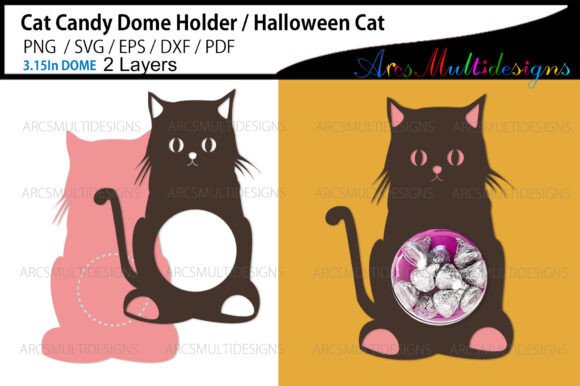
Cat Candy Dome Holder
A Designer’s First Glance: Playful, Precise, and Purpose-Built
Opening Cat Candy Dome Holder for the first time, I felt that quiet spark of recognition—the kind that comes when a design immediately signals its intent. It’s not overly fussy or cutesy in a dated way; instead, it balances charm with clean structure. The dome shape anchors the composition, while the cat motif (think rounded ears, soft cheek contours, and subtle candy accents) lands with warmth—not saccharine, but sincere. As a machine embroidery design, it reads well at a glance: no tiny disconnected elements, no fragile limbs begging to fray, and a silhouette that holds up even before stitching begins. That tells me it was drafted with real fabric and real hoops in mind—not just as a graphic, but as an embroidery file meant to translate faithfully from screen to stitch.
Where It Shines: Real Projects, Real Customers
Last week, I tested Cat Candy Dome Holder on a batch of organic cotton tea towels for a local boutique launch. We paired it with a simple monogrammed corner and used soft pastel thread—mint, buttercream, and dusty rose—on natural linen-look fabric. The result? Instant personality. Customers paused at the display, smiled, picked one up, and asked, “Is that *just* for cats?” (Spoiler: yes—and that’s the point.) It worked beautifully as a sweatshirt embroidery on midweight fleece, holding crispness without excessive fill stitch density. On a baby onesie? Scaled down to 3.2", it kept all its sweetness—no lost details, no thread nesting. As an embroidered patch sewn onto a denim apron? It held its shape through washing and wear, thanks to balanced satin stitch borders and thoughtful spacing between elements.
I’ve also used Cat Candy Dome Holder as a focal point on custom tote bags for a small craft fair vendor. Because the dome shape naturally frames the cat face, it gave us room to add a tiny hand-stitched “Meow” underneath—blending machine precision with handmade charm. For Etsy sellers, this is gold: it’s distinctive enough to stand out in search results, but versatile enough to slot into nursery decor, holiday embroidery bundles, or even wedding favor tags (yes—cat lovers *do* get married).
Where to Proceed Thoughtfully
That said, Cat Candy Dome Holder isn’t magic—it’s a tool, and tools need context. On ultra-thin fabrics like voile or lightweight rayon, I recommend testing stabilizer layers first; the satin stitch around the dome edge benefits from medium-weight cutaway, especially if you’re planning frequent washing. On dark fabric, avoid light thread unless you’re intentionally going for contrast-as-feature—test black or charcoal thread against navy or charcoal heather to preserve depth and readability. And on curved surfaces like caps? Resize carefully. At full size (approx. 4.5"), the dome can pull slightly on the front panel; scaling to 3.75" kept tension even and preserved clarity on the cat’s eyes.
Don’t rush into dense applique design territory with this one—while it *can* be adapted, its strength lies in its simplicity as a standalone embroidery file. Tiny lettering isn’t part of the original layout, so adding names or dates means reworking spacing manually. Also, avoid layering it over busy prints or textured knits (like bouclé or heavy terry) unless you’re prepared to adjust stitch density and stabilizer choice. This isn’t a design that hides flaws—it celebrates clean execution.
What It Adds to Your Finished Product—Beyond Aesthetics
Here’s what matters most to craft business owners and Etsy sellers: Cat Candy Dome Holder elevates perceived value without demanding premium production time. Its balanced proportions and intentional negative space make finished items look considered—not rushed. Customers notice that. When used on personalized gifts (think baby blankets or custom pillow covers), it reads as warm and intentional, not generic. That builds trust: people buy handmade products because they want authenticity, and this design delivers it visually and tactically.
For branding, it slots neatly into a cohesive line—pair it with coordinating graphics like paw prints or candy stripes, and you’ve got a mini collection ready for printable mockups or digital product previews. It supports brand consistency without locking you into one aesthetic: go minimalist with tonal thread on oatmeal canvas, or joyful with variegated floss on kraft paper gift tags. Either way, it feels professional—not amateurish, not over-engineered.
Practical Notes Every Embroidery Designer Should Keep Handy
- Always test on scrap fabric first—especially if using stretchy or napped materials.
- Check thread color contrast across both light and dark backgrounds before finalizing your palette.
- Review stitch density in your embroidery software—look for areas where fill stitches might compress or distort on lightweight fabrics.
- Confirm hoop size compatibility; while the design fits standard 4x4 hoops comfortably, verify if your machine requires adjustments for border clearance.
- Inspect small details like ear tips and candy highlights—they’re legible at recommended sizes but may blur if scaled below 2.8".
- Test black-and-white mockups to assess visual weight and balance before committing to color.
- Use proper stabilizer: medium cutaway for stable wovens, tear-away for stable knits, and fused + cutaway for delicate or stretchy substrates.
- Verify licensing before selling finished items or bundling Cat Candy Dome Holder into commercial embroidery kits—this is a digital embroidery file, and usage rights matter for craft business sustainability.
Final Thought: A Design That Works—Not Just Looks Nice
Cat Candy Dome Holder doesn’t shout. It invites. It’s the kind of embroidery file that earns repeat use—not because it’s flashy, but because it solves problems: it fits well, stitches cleanly, resonates emotionally, and supports real business goals. Whether you’re stitching baby embroidery for a newborn announcement, building a line of holiday embroidery for your Etsy shop, or sourcing reliable design assets for a small shop product launch, this one earns its place in your library. It’s proof that great Crafts and Graphics aren’t about complexity—they’re about clarity, care, and quiet confidence in how they land on fabric, in hands, and in hearts.