Cat Mummy SVG: Halloween Cat Cute
First Impressions: A Playful, Stitch-Ready Vibe
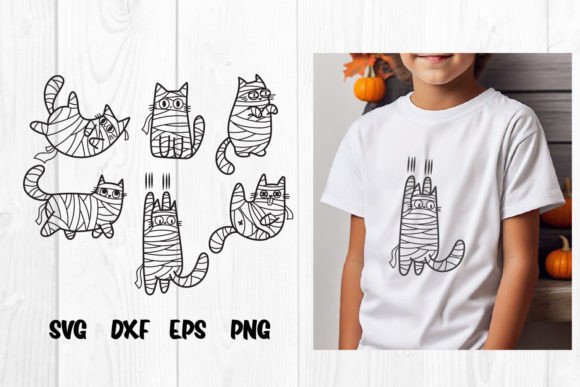
When I opened Cat Mummy SVG: Halloween Cat Cute, I wasn’t just scanning for cut lines—I was asking: *Will this hold up under needle and thread?* Visually, it’s a compact, charming silhouette: a round-faced cat swaddled like a tiny mummy, with subtle bandage wraps, expressive eyes peeking out, and just enough whimsy to land as “Halloween cute,” not spooky. It’s not overly detailed—no fine whiskers or intricate paw pads—but that’s smart design discipline. As a machine embroidery design, its clean outlines and balanced negative space suggest strong stitchability across fabric types. It feels purpose-built for small-to-medium hoop work: think embroidered patches, baby onesies, or the front chest of a sweatshirt—not a full-coverage quilt block.
A Real Project Test: Custom Embroidered Tote Bags for a Local Boutique
Last week, I used Cat Mummy SVG: Halloween Cat Cute to create limited-edition holiday totes for a neighborhood craft shop. We chose natural canvas tote bags—medium-weight, slightly textured, and unbleached. The design scaled cleanly to 3.2” wide, centered on the front panel. With medium tear-away stabilizer and 40-weight polyester thread (a warm charcoal gray on cream fabric), the finished stitch held crisp edges without puckering. Customers responded immediately: “It’s sweet but not saccharine,” one said. “Feels handmade, not mass-produced.” That’s the quiet power of this file—it reads as intentional, friendly, and seasonally appropriate without leaning into cliché. For Etsy sellers or small shop owners, that emotional resonance translates directly to giftability and repeat engagement.
Where It Shines—and Where to Pause
Cat Mummy SVG: Halloween Cat Cute works especially well for:
- Custom apparel: Sweatshirts, crewneck tees, and kids’ hoodies—its compact shape avoids seam interference and reads clearly at 2.5–4” sizes.
- Embroidered patches: Clean outer contour makes it ideal for iron-on or sew-on patch production; minimal interior detail means fewer thread breaks during high-volume stitching.
- Baby embroidery: Gentle theme, no sharp angles or aggressive contrast—perfect for onesies, burp cloths, or nursery pillow covers.
- Holiday gifts & boutique branding: Pairs effortlessly with minimalist packaging or kraft tags; feels cohesive in a curated seasonal collection.
But be thoughtful with these applications:
- Thin or stretchy fabric: On lightweight jersey or ribbed knit, use cut-away stabilizer and reduce stitch density if possible—those smooth bandage curves can distort without firm backing.
- Dark fabric backgrounds: The design relies on shape and silhouette more than internal texture, so test thread color contrast early. A light gold or off-white thread pops beautifully on navy or charcoal—but avoid pale yellow on beige.
- Curved surfaces (caps, hats): Its rounded form adapts well, but avoid placing near the bill seam or crown point unless you’ve confirmed hoop clearance and fabric tension behavior.
- Frequent-wash items: While the stitch layout is stable, skip dense fill areas in high-friction zones (e.g., tote bag bottom corners). Running stitch outlines or satin-stitched borders hold up better over time than heavy fill in small spaces.
Design Assets That Build Trust—Not Just Decor
As a digital embroidery file, Cat Mummy SVG: Halloween Cat Cute delivers more than visual charm—it supports professionalism. Because the vector files (SVG, EPS, DXF) are cleanly layered and scalable, I could easily adapt it for a printable mockup series: same design, three fabric backgrounds (cream linen, heather gray sweatshirt, black tea towel), all matching real stitch placement. That consistency builds buyer confidence—especially for Etsy sellers listing digital embroidery files alongside finished product photos. And for craft business owners bundling physical + digital products, having PNGs at 300 DPI means crisp web thumbnails and social previews without pixelation.
What stands out is how little “fixing” this file required. No stray anchor points, no overlapping paths, no hidden layers—just a focused, production-ready illustration. That saves time when prepping for commercial embroidery or batch-producing embroidered patches. It also signals respect for the user’s workflow: you’re not troubleshooting geometry—you’re designing.
Practical Designer Notes Before You Stitch
Before committing Cat Mummy SVG: Halloween Cat Cute to your next project, do these five things:
- Test on scrap fabric—same weight and weave as your final product—to confirm stabilizer choice and thread tension.
- Check stitch density in your embroidery software. If fill areas feel overly dense for your fabric, simplify with a lighter fill pattern or switch to satin stitch for bandage wraps.
- Verify hoop size compatibility. This design fits comfortably in a 4” x 4” hoop, but confirm your machine’s max dimensions before scaling.
- Inspect small details at 200% zoom in your editor—especially the eye highlights and bandage ends. They should remain distinct, not merge into blobs.
- Review licensing terms before selling finished items or reselling the digital embroidery file. Since this falls under Crafts and Graphics, clarify whether commercial use is included—or if attribution or limitations apply.
One final note: try rendering the design in grayscale first. Does the contrast hold? Does the mummy wrap still read as dimension—not just line? That simple step reveals how well it’ll translate across fabric colors and lighting conditions, from a sunlit craft fair booth to a dimly lit Instagram story.
Cat Mummy SVG: Halloween Cat Cute isn’t just a seasonal graphic—it’s a thoughtful, stitch-savvy asset. When used intentionally—with attention to fabric, stabilizer, and context—it elevates handmade product perception, strengthens brand voice, and quietly reassures customers they’re choosing something designed *for making*, not just for looking.