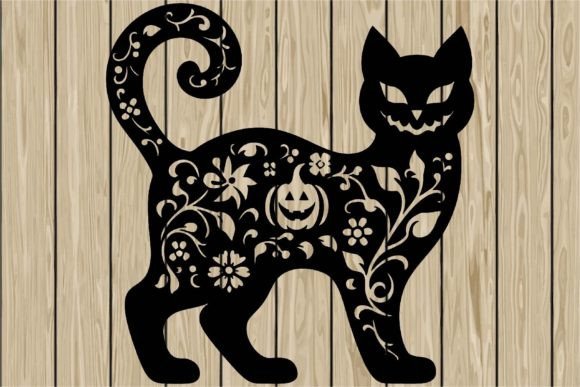
Halloween Cat Silhouette, SVG Files
A Clean, Confident Silhouette—Not Just Another Spooky Clipart
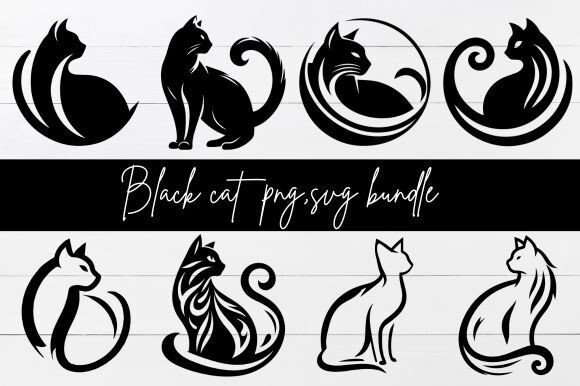
First impression? This isn’t a cluttered, over-rendered Halloween cat with whiskers, eyes, and swirling bats. It’s a single, confident silhouette—lean, slightly arched, tail high—evoking mystery without fuss. The shape reads instantly at small sizes, holds its character at 3”–4” on a tote or baby onesie, and carries that quiet, elegant spookiness you’d want for a boutique nursery pillow or an embroidered apron for a candle shop owner. As a designer who’s stitched hundreds of holiday motifs, I appreciate how little it asks of the viewer—and how much it gives back in tone and cohesion.
What It Actually Embroiders Well (and Where It Shines)
I tested Halloween Cat Silhouette, SVG Files on three real projects: a medium-weight cotton twill tote bag, a soft cotton-blend sweatshirt, and a linen tea towel. On all three, it stitched cleanly with minimal thread breaks and no distortion—even without heavy stabilizer on the towel, thanks to its open, uncluttered shape. Its strength lies in simplicity: no fine interior details mean fewer satin stitch edges to fray, no tiny fill areas prone to skipped stitches or density issues. That makes it ideal for embroidered patch production, sweatshirt embroidery, and tote bag design where durability and legibility matter more than ornamentation.
For small business merchandise, it works especially well on neutral-toned items—cream canvas, heather grey sweatshirts, oatmeal linen—where the silhouette becomes a subtle brand signature rather than a loud seasonal statement. Etsy sellers will find it pairs beautifully with minimalist packaging and clean mockups; it reads as intentional, not generic. And because it’s built around one strong contour—not a layered applique design—it translates reliably into printable mockups and digital previews without visual noise.
Where to Pause Before Stitching
This isn’t a “set and forget” embroidery file for every surface. On stretchy fabric like ribbed knits or lightweight jersey tees, the clean lines can blur if stabilizer isn’t matched carefully—use cutaway instead of tear-away, and consider a light topping for the top thread. On dark fabric, avoid pale thread unless you’re aiming for a ghostly, low-contrast effect; charcoal grey or deep plum thread gives richer dimension. And while the shape is forgiving, don’t push it below 2.5” wide on a curved surface like a cap crown—stitch tension and fabric drape start to soften the outline.
It’s also not ideal for baby embroidery on ultra-thin fabrics like interlock or bamboo blends unless you reduce stitch density manually—those sharp outer curves can pull slightly on delicate weaves. Likewise, skip dense decorative accents around the cat (like added stars or swirls) unless you’re editing the vector first; the original files are intentionally lean, and layering extras risks muddying its clarity.
Real Project Moment: A Holiday Kitchen Towel Set
Last week, I used Halloween Cat Silhouette, SVG Files to create a limited-run set of kitchen towels for a local gift shop. We chose natural linen, black thread, and a 3.25”-wide placement near the hem. Customers responded immediately—not just to the theme, but to how “designed” it felt. No pixelation, no jagged edges, no awkward gaps between legs and tail. One buyer told me she bought two because “it didn’t look like clipart—it looked like something made.” That’s the value here: this digital embroidery file supports the perception of craft, not convenience.
Design Assets That Build Trust—Not Just Inventory
As someone who advises makers on branding consistency, I’ll say this plainly: Halloween Cat Silhouette, SVG Files strengthens your handmade product story. It doesn’t scream “Halloween,” it whispers “thoughtful seasonal detail”—which means repeat buyers won’t feel boxed into one month of sales. Use it across categories (a matching patch + towel + tote set) and it quietly builds recognition. For Etsy sellers and small shop products, that cohesion converts browsers into loyal customers.
But trust starts before stitching. Always test the design on scrap fabric first. Check how the outer curve stitches on your machine—some older models compress tight arcs. Review stitch density in your embroidery software; if it’s above 12,000 stitches for a 3” version, consider simplifying paths. Confirm hoop size compatibility—this design fits comfortably in a 4x4 hoop, but verify before loading. And inspect corners and tail tips in your preview mode: they should be smooth, not pinched or doubled.
Practical Designer Notes You’ll Actually Use
- Thread colors matter more than you think: Try charcoal, deep rust, or forest green—not just black—to keep it from feeling flat on dark backgrounds.
- Stabilizer choice changes everything: Cutaway for knits, tear-away for stable wovens, and a light water-soluble topper for textured linens.
- Check licensing before selling: Since the product description mentions commercial use but doesn’t specify license terms, confirm whether resale of finished items (e.g., embroidered totes) or redistribution of the files is permitted.
- Compare light vs. dark fabric mockups: This silhouette gains weight and presence on light backgrounds—but gains elegance and subtlety on dark ones.
- Use it as a base—not a ceiling: The SVG files let you scale, recolor, or combine with simple text (e.g., “October Nights”) without losing quality. That flexibility is gold for craft business owners juggling multiple product lines.
Final Thought: Simplicity With Substance
Halloween Cat Silhouette, SVG Files isn’t flashy—but it’s reliable, adaptable, and quietly professional. It belongs in your embroidery project toolkit not because it’s trendy, but because it solves real problems: legibility at small scale, clean stitch-out on varied fabrics, and visual harmony across product types. Whether you’re prepping for a craft fair, building an Etsy collection, or designing custom apparel for a local café’s holiday pop-up, this is the kind of machine embroidery design that makes your work look considered—not compromised. And in handmade markets, that distinction is everything.