Scottish Fold Cat Face SVG Cut File
A Designer’s First Glance: Charm with Quiet Confidence
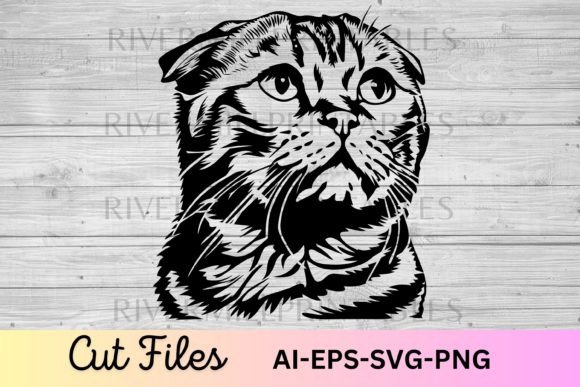
Opening the Scottish Fold Cat Face SVG Cut File, I immediately felt its quiet charm—not cutesy, not cartoonish, but gently expressive. The face sits centered, with softly rounded ears, subtle cheek contours, and eyes that suggest calm curiosity rather than exaggerated whimsy. It reads as a cohesive silhouette, not a collection of disconnected shapes. That matters deeply when translating into embroidery: clean outlines mean fewer jump stitches, smoother satin edges, and better stitch definition on fabric. As a designer who regularly sources embroidery files for client work and small-batch merchandise, I appreciate how this design avoids visual clutter—no tiny whiskers, no intricate nose texture, no fussy inner ear lines. It’s intentionally distilled, which gives it real flexibility across custom apparel, personalized gifts, and small shop products.
Real-World Test: Embroidering a Linen Kitchen Towel
Last week, I stitched the Scottish Fold Cat Face SVG Cut File onto a heavyweight natural linen tea towel—exactly the kind I’d sell in my own craft shop or list on Etsy as a boutique kitchen gift. I used a medium-weight cutaway stabilizer, 40-weight rayon thread, and a 4-inch hoop. The result? Crisp, confident stitching. The face held its shape without distortion, even around the gentle curve of the ear folds. Customers respond well to designs that feel intentional—not overly busy, not underwhelming—and this one lands right in that sweet spot. It reads clearly at 3.5 inches wide, making it ideal for tote bag design, apron embroidery, or pillow cover accents. It doesn’t shout; it invites. That’s valuable when building brand consistency for a handmade product line.
Where It Shines—and Where to Pause
This machine embroidery design excels on stable, medium-to-heavy fabrics: denim jackets, cotton sweatshirts, canvas totes, twill caps, and baby blankets. Its balanced proportions translate cleanly to embroidered patch formats and hold up beautifully on holiday embroidery like Christmas stockings or Easter pillows. For baby embroidery, it’s soft enough to feel tender without being saccharine—a rare win.
That said, proceed thoughtfully on stretchy fabric (like ribbed knit onesies) or thin fabric (such as lightweight voile). The design’s moderate stitch density works well on most substrates, but avoid pushing it below 2.75 inches wide on delicate materials—fine details may blur. On dark fabric, test contrast carefully: light thread can read softly unless you add a white underlay or adjust density. And while it adapts well to curved surfaces like caps, always pre-test on scrap fabric with your exact stabilizer combo. Don’t assume the file includes underlay or pull compensation—it’s a cut file, not an auto-digitized embroidery file.
Design Integrity Meets Commercial Practicality
What makes the Scottish Fold Cat Face SVG Cut File genuinely useful for craft business owners isn’t just its aesthetic—it’s how it supports professionalism in finished work. When customers see this on a hand-stitched apron or a boutique sweatshirt, they register care and cohesion. There’s no visual confusion, no awkward spacing, no “why is that ear lopsided?” moment. That builds customer trust and reinforces perceived value. For Etsy sellers or small shop owners, that quiet polish helps listings stand out amid algorithm noise. It also works seamlessly in printable mockups: the clean vector outlines render sharply in digital previews, supporting strong digital product presentations.
Essential Embroidery Designer Notes
- Always test first: Run the design on scrap fabric matching your final substrate and stabilizer—especially before committing to a client project or batch production.
- Check thread color contrast: Try black, navy, and heather gray threads against both light and dark backgrounds. The design’s simplicity means color choice carries extra weight.
- Review stitch density: If digitizing yourself, ensure fill areas aren’t over-stitched—this keeps fabric from puckering on items like kitchen towels or baby clothes.
- Confirm hoop size compatibility: While the SVG scales freely, your embroidery machine’s maximum hoop dimension sets hard limits—verify before digitizing.
- Inspect small details: Zoom in on the eye corners and ear curves in your embroidery software. Are anchor points smooth? Any stray nodes? Clean vectors prevent jagged satin edges.
- Test light/dark mockups: Use grayscale previews to assess legibility—this reveals contrast issues invisible on screen.
- Stabilizer matters: For textured fabrics like terry cloth or bouclé, pair with a tear-away + cutaway hybrid. For applique design use, consider adding a border stitch manually.
- Licensing check: Since this is listed as a Graphics product in the Crafts category, confirm whether commercial use of finished embroidered items is permitted—don’t assume.
Final Thought: A Thoughtful Tool, Not Just a Trend
The Scottish Fold Cat Face SVG Cut File isn’t flashy—but then, the best design assets rarely are. It’s a thoughtful, adaptable foundation for embroidery projects that prioritize warmth, clarity, and craftsmanship. Whether you’re stitching a one-of-a-kind personalized gift, building a cohesive line of custom apparel, or sourcing reliable digital embroidery files for your creative business, this design earns its place in your working library—not because it’s trendy, but because it performs. It respects the material, the machine, and the maker’s time. And in the world of handmade product creation, that kind of respect is the quietest, strongest kind of value.