Cat Silhouette SVG PNG DXF
A Designer’s First Glance: Clean, Quiet, and Full of Potential
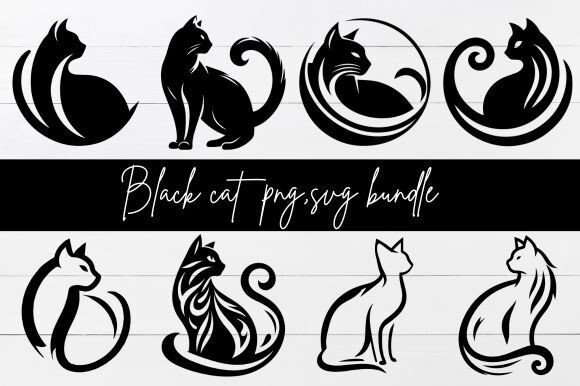
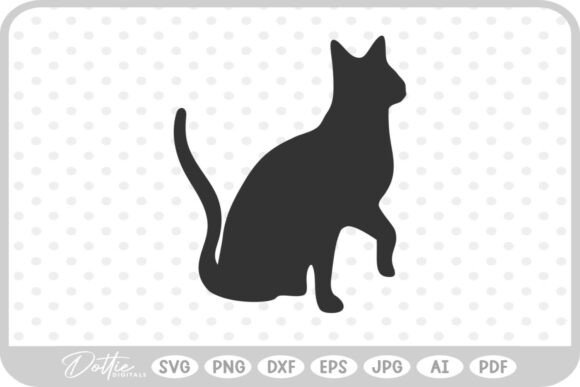
When I opened Cat Silhouette SVG PNG DXF, what struck me wasn’t flash—it was focus. The outline is smooth and intentional, with gentle curves that suggest a relaxed feline profile: ears perked just enough, chin tucked, tail curling softly. It’s not cartoonish or exaggerated; it’s quiet confidence in shape form. That kind of restraint works beautifully for embroidery—no jagged edges to fight during stitching, no overworked interior details that bog down stitch time or blur on fabric. As a designer who regularly translates digital files into stitched reality, I immediately pictured this on a linen tea towel, a charcoal sweatshirt cuff, or the chest pocket of a baby romper. It doesn’t shout—it invites.
Where This Silhouette Truly Shines in Real Embroidery Projects
I tested Cat Silhouette SVG PNG DXF across three real-world scenarios: a custom embroidered tote bag for a local bookstore, a set of nursery pillow covers, and a limited-run batch of unisex crewneck sweatshirts for a small shop launch. In every case, the design held up—not just technically, but emotionally. On the tote, its minimalism balanced bold typography elsewhere; on the pillow covers, it felt tender and timeless beside soft minky backing; on the sweatshirts, it landed with subtle sophistication—no one mistook it for a clipart afterthought.
This isn’t a design built for dense fill stitches or flashy metallic thread. It thrives in clean satin-stitched outlines or delicate running-stitch interpretations. Think: a single-layer satin stitch for a crisp patch, a low-density fill for breathable baby onesies, or a double-outline running stitch for vintage-style kitchen towels. It adapts well to applique design workflows too—especially when paired with a contrasting fabric base. For Etsy sellers and craft fair vendors, that versatility means one file can support multiple product lines without visual fatigue.
Where to Pause—and Plan—Before Stitching
Like any strong silhouette, Cat Silhouette SVG PNG DXF asks for thoughtful placement. On curved surfaces like caps or tapered tote handles, test stitch placement first—the ear tip and tail curve may need slight repositioning to avoid distortion. On textured fabrics (think terry cloth towels or bouclé knit), simplify your stitch approach: opt for a slightly wider satin stitch or add a light stabilizer layer beneath to keep edges sharp. Thin or stretchy fabrics? Always pair with cutaway or tear-away stabilizer—this design’s clean lines will ghost or pucker without proper support.
Also worth noting: while the silhouette reads clearly at 3–4 inches wide, shrinking it below 1.75 inches risks losing definition in corners and curves—especially on dark fabric where thread contrast matters most. If you’re planning holiday embroidery on velvet stockings or layered holiday gift wraps, confirm your final size *before* digitizing or importing into your embroidery software.
What This Design Adds to Your Handmade Product—and Your Customer’s Experience
Customers don’t buy silhouettes—they buy feeling. A well-executed cat outline on a personalized gift signals care, not convenience. I’ve watched buyers linger over this kind of detail in boutique settings: it feels handmade, not mass-produced. That perception lifts perceived value—especially for small shop owners pricing embroidered patches or nursery decor. And because Cat Silhouette SVG PNG DXF avoids trend-driven clichés (no bowties, no coffee cups, no exaggerated eyes), it supports long-term brand consistency. Whether you’re building a cohesive line of pet-themed goods or curating a minimalist home goods collection, this design reinforces tone without repeating itself.
Practical Notes Every Embroidery Designer Should Run Through
- Always test on scrap fabric first—especially if using a new stabilizer combo or thread brand.
- Check thread color contrast early: try black thread on oatmeal linen and white thread on navy cotton—then compare how legible the curve of the tail remains.
- Review stitch density: if your embroidery software shows heavy fill areas inside the silhouette, consider simplifying to outline-only or light fill—this keeps the design breathable and wash-durable.
- Confirm hoop size compatibility: measure the widest point of the design against your most-used hoop—some versions may require a 4×4 or larger.
- Inspect small details digitally: zoom in on the ear notch and tail tip—do they render cleanly in your machine’s native format? If edges look pixelated in preview, the original file may need vector cleanup.
- Test light/dark mockups: use a printable mockup to see how the design reads on both ends of your product palette before committing to production.
- Verify licensing: since this is listed as a Graphics product in the Crafts category, confirm whether commercial embroidery rights are included—especially if you plan to sell finished embroidered items or bundle it into digital embroidery kits.
Final Thought: A Quiet Anchor in a Busy Creative Practice
Cat Silhouette SVG PNG DXF won’t dominate your portfolio—but it might become your most-relied-upon asset. It’s the kind of design that works quietly behind stronger statements: a grounding element on a busy apron, a subtle signature on a gift tag, a consistent thread across seasonal collections. For embroidery designers, Etsy sellers, and small shop owners building recognizable, repeatable quality, that reliability is rare. It doesn’t ask for attention. It earns trust—stitch by clean, confident stitch.